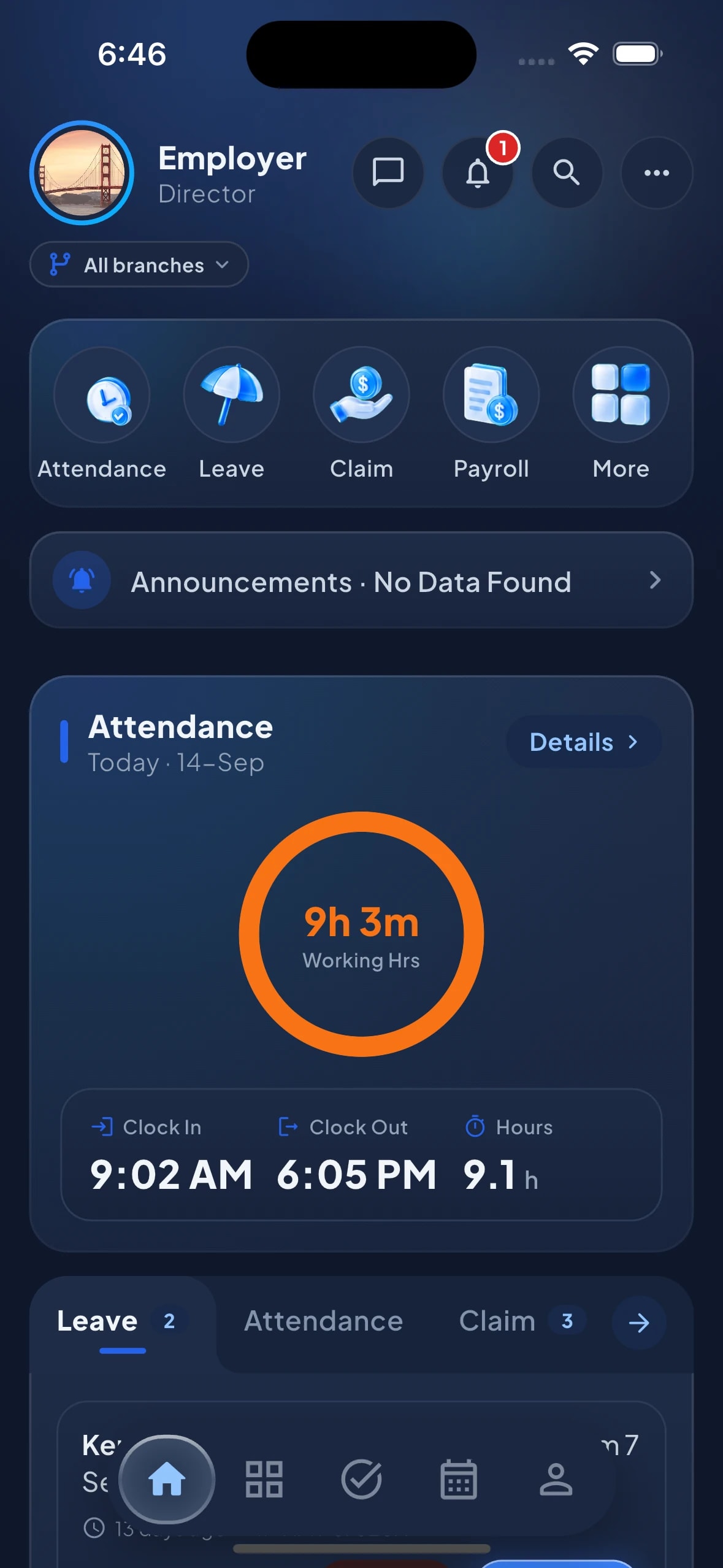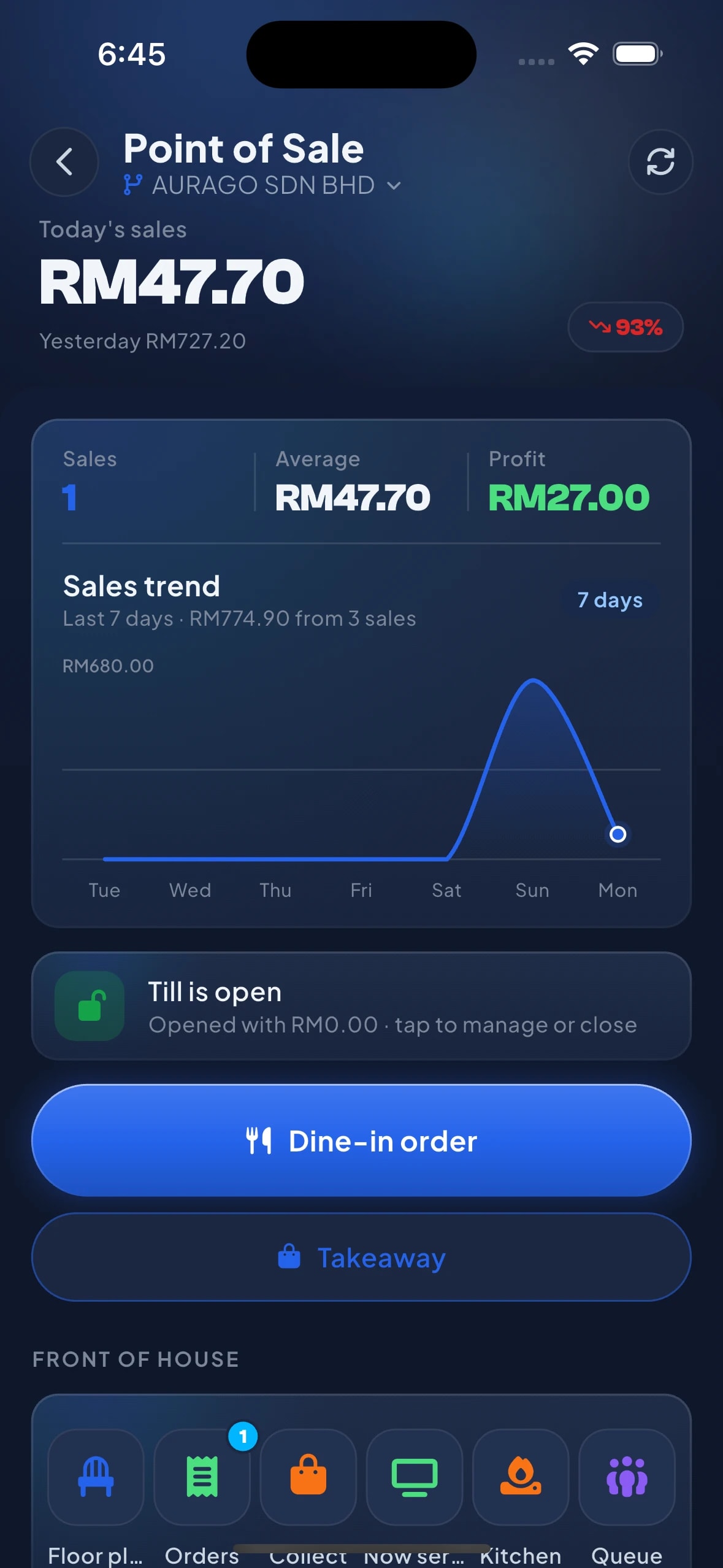

Scan to sell, open tabs, pay-after ordering, a floor map and a kitchen screen — and every sale is a journal entry and a stock movement the moment the receipt prints. No nightly export, no CSV.
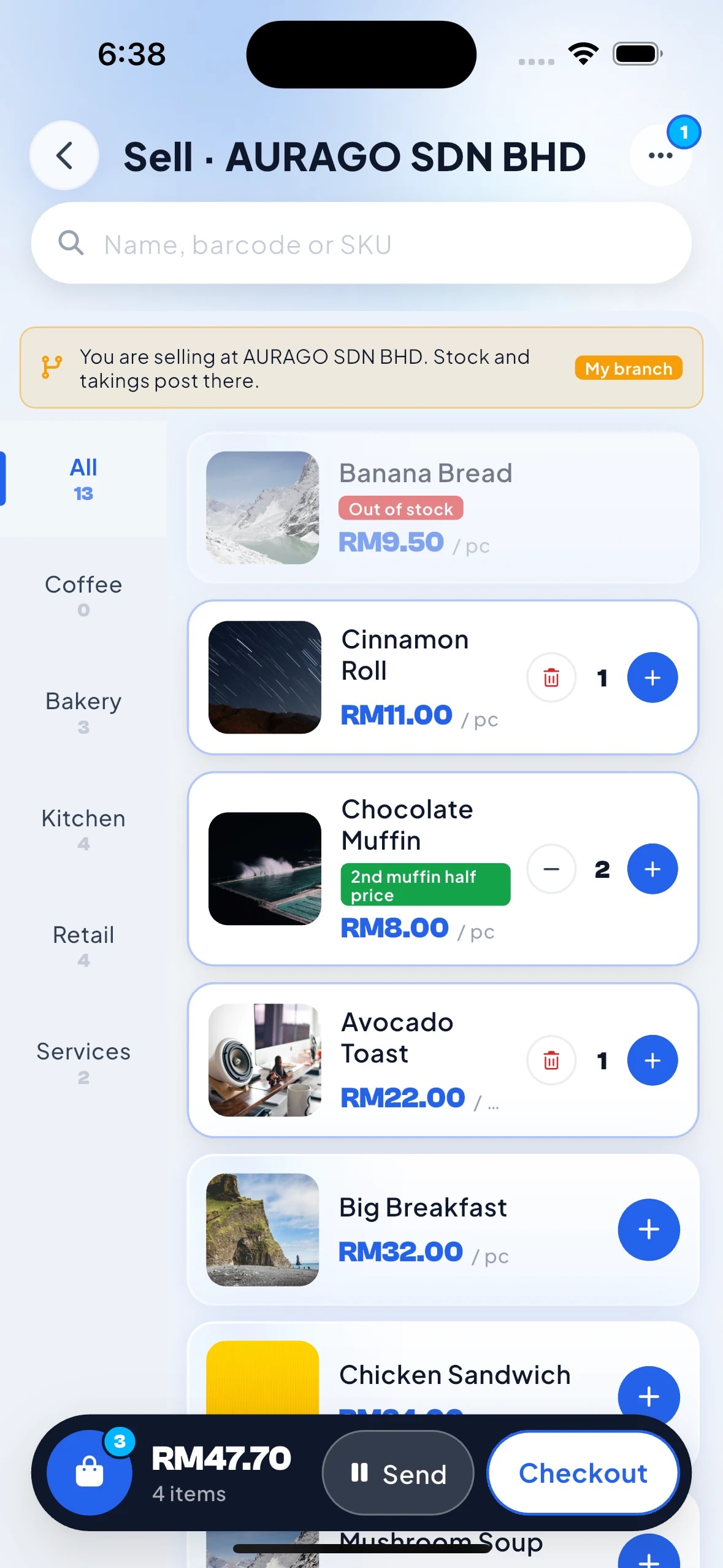
Scan, tap, charge
Barcode scan or a tap on the tile. Measured selling by weight or length, timed billing by the hour, lots with expiry that cannot be sold past their date.
Floor map and open tabs
Rooms, tables and their state on one plan. Order first, pay after, on the table it came from. Bookings on the tiles, find-a-table search.
Kitchen screen and queue
Orders reach the pass as they are rung, with a call-number queue for the counter and a now-serving board for the floor.
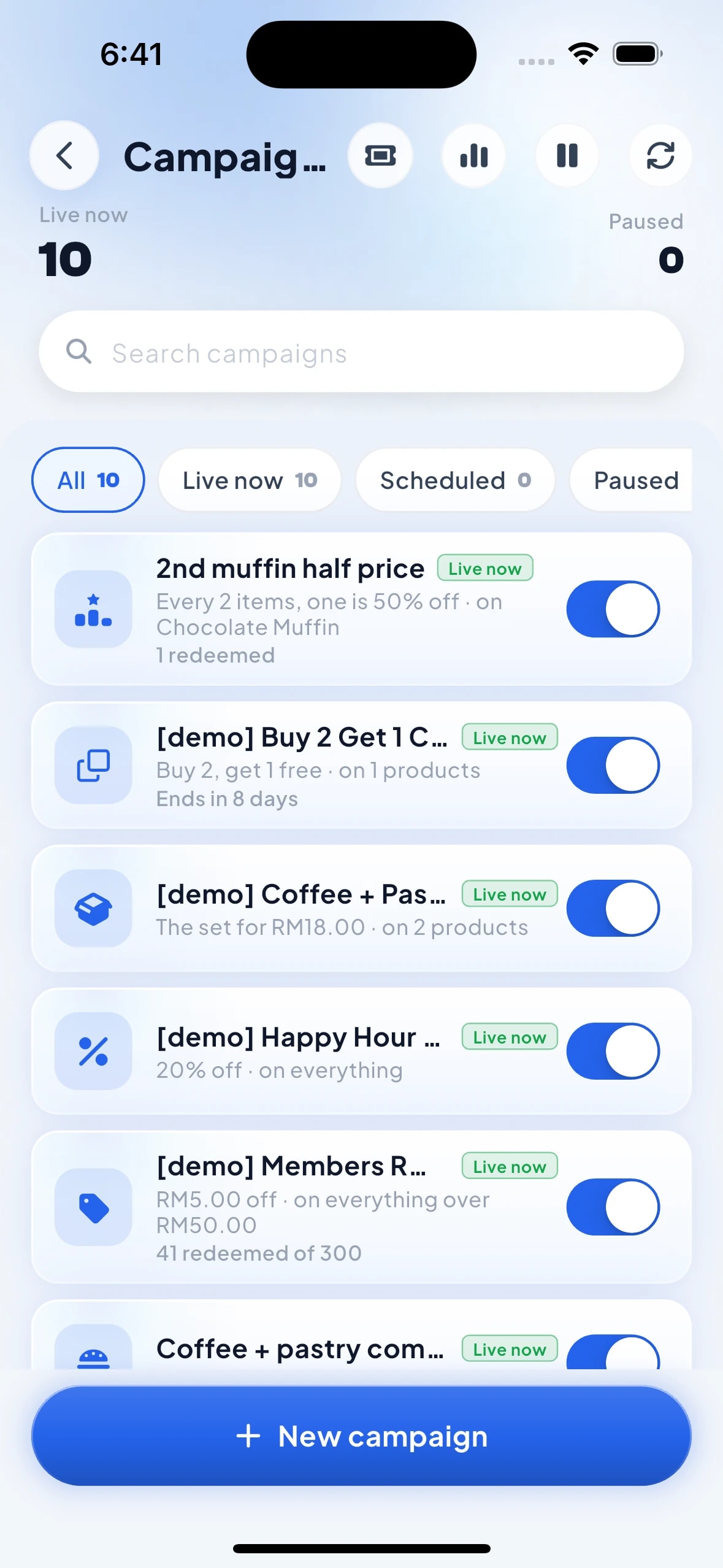
Promotions that account for themselves
Fourteen mechanics — B1G1, bundles, vouchers, happy hour — attributed line by line, with tax done right and a report on uplift against baseline.
A day-end that closes itself
Cash count against expected, card and QR totals, the variance, the Z reading — and the journal already posted, so there is nothing to key in later.
Receipts on the printer you own
Bluetooth and network receipt printers found on the LAN, kitchen slips and queue tickets, a byte-accurate preview before the first print.
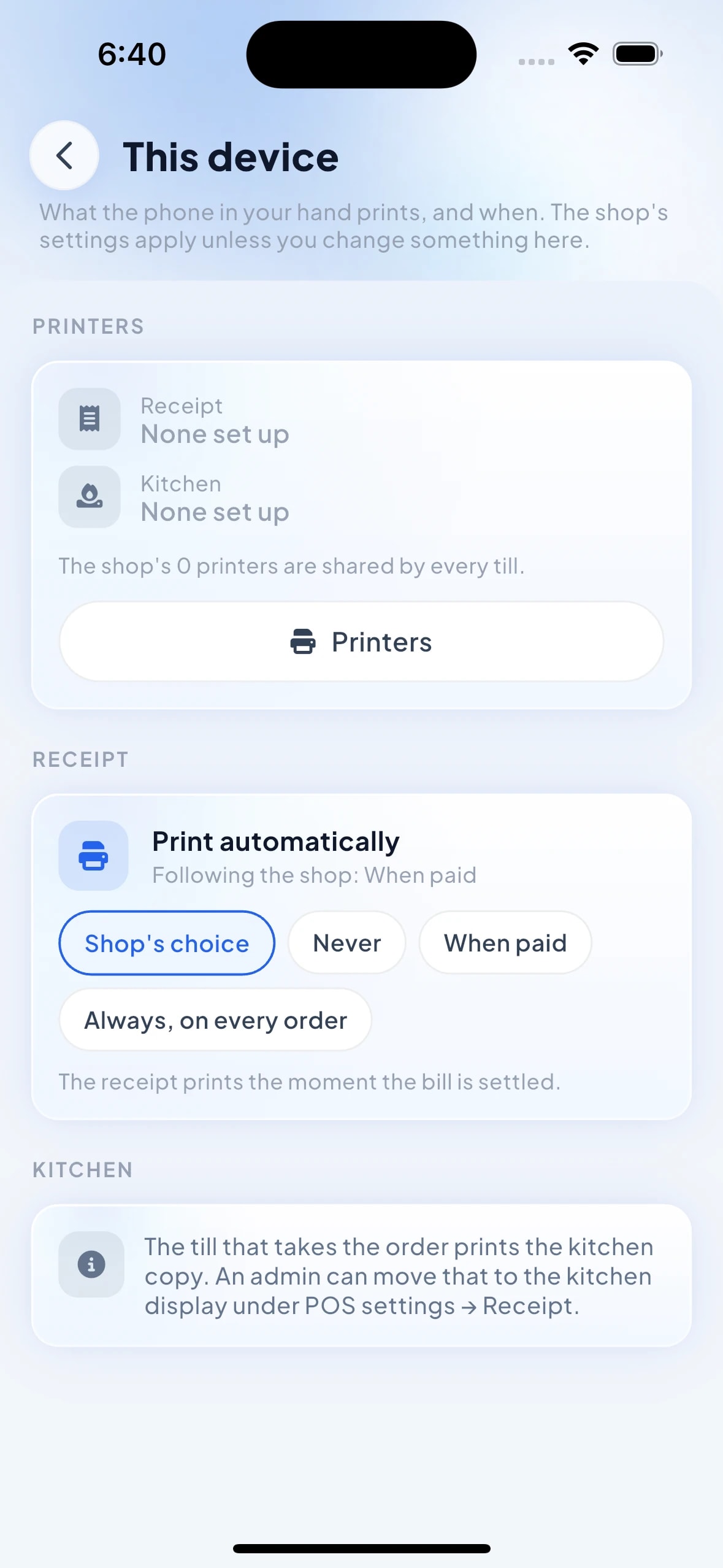
Drag, or let it turn. Each one is a real capture from the app.
Nothing here is an integration. These are the modules that share the same records — open any of them and the figures are already there.
The till keeps ringing sales and queues them; they post the moment the connection is back. Receipts still print.
What happens when the connection drops at the counter?
The till keeps ringing sales and queues them; they post the moment the connection is back. Receipts still print.
See your first bill before you pay one.
Sign up without a card. Use the whole product until the end of next month. At period close you get a real, itemised invoice for RM 0.00 showing what it would have cost.