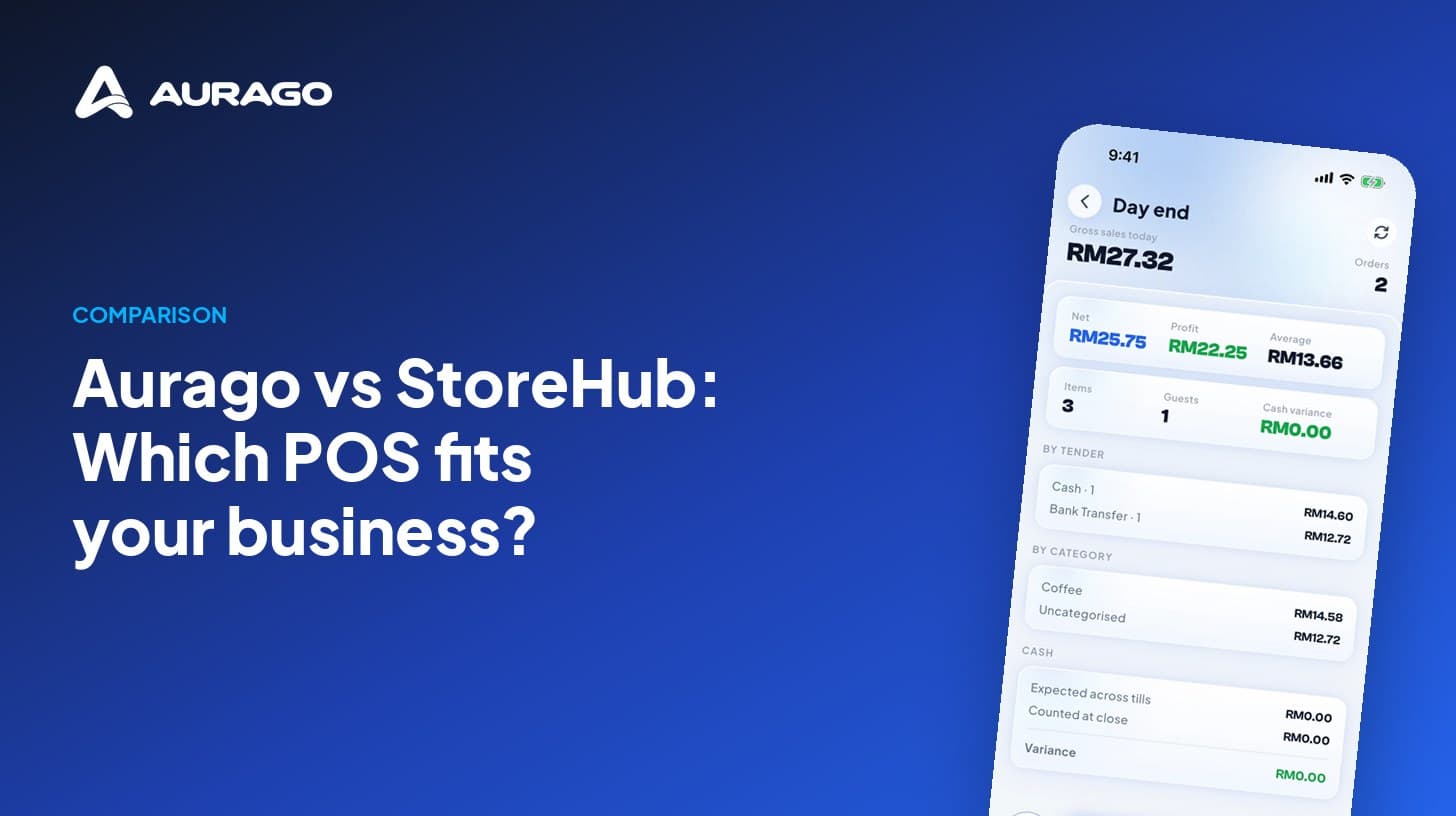
Aurago vs StoreHub: Which POS Fits Your Business?
StoreHub is an established POS with delivery and loyalty built in. Aurago's till shares one set of records with your books and payroll. Compared side by side.
FeedMe is a restaurant POS with its own hardware. Aurago's till shares one set of records with your books and payroll. Prices and features, side by side.
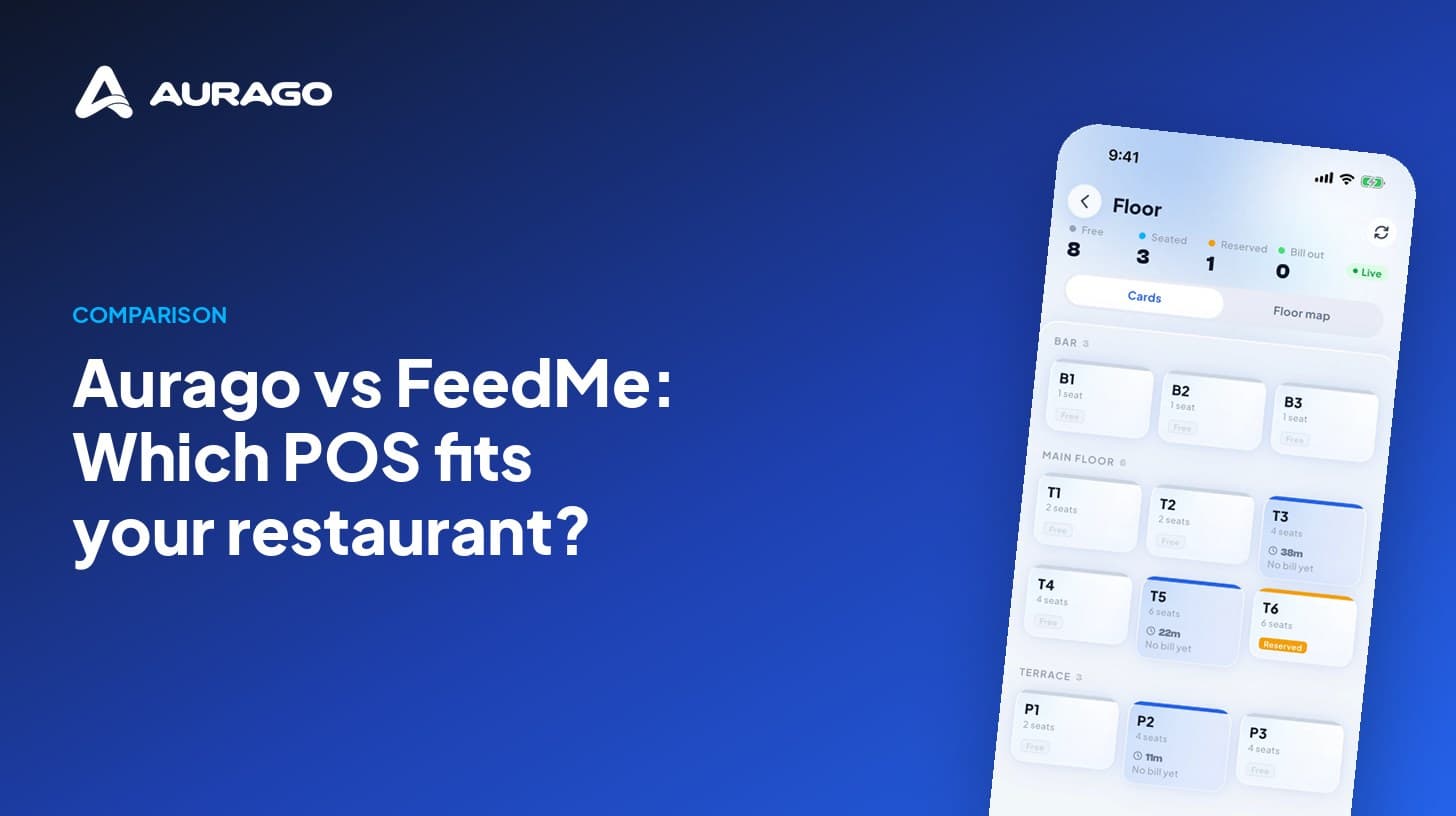
FeedMe and Aurago both run a restaurant's front of house: tables, QR ordering, a kitchen screen, receipts. The difference is what sits behind the counter.
FeedMe is built around the restaurant. It sells its own terminals and kitchen screens, connects to delivery platforms and malls, and hands your sales to accounting software. Aurago's till is one part of a system that also keeps the books, runs payroll and raises invoices, so the day's takings post to the same ledger as everything else instead of being exported to it.
Aurago wrote this comparison. Every figure about FeedMe links to where we read it, on 25 September 2026, and where FeedMe is the better fit, we say so.
| FeedMe | Aurago | |
|---|---|---|
| Built for | Restaurants, cafés and F&B chains | Any trade: the till takes a different shape for cafés, restaurants, retail, salons, rentals and more |
| Pricing | Lite, Standard and Premium plans, prices on request | From RM 49 a month, set by the size of your team |
| Commitment | Licences bought or renewed yearly | Monthly, no minimum term |
| Tills and outlets | Unlimited sub-POS on Premium | Unlimited, on every plan |
| QR ordering at the table | Standard and Premium | Included |
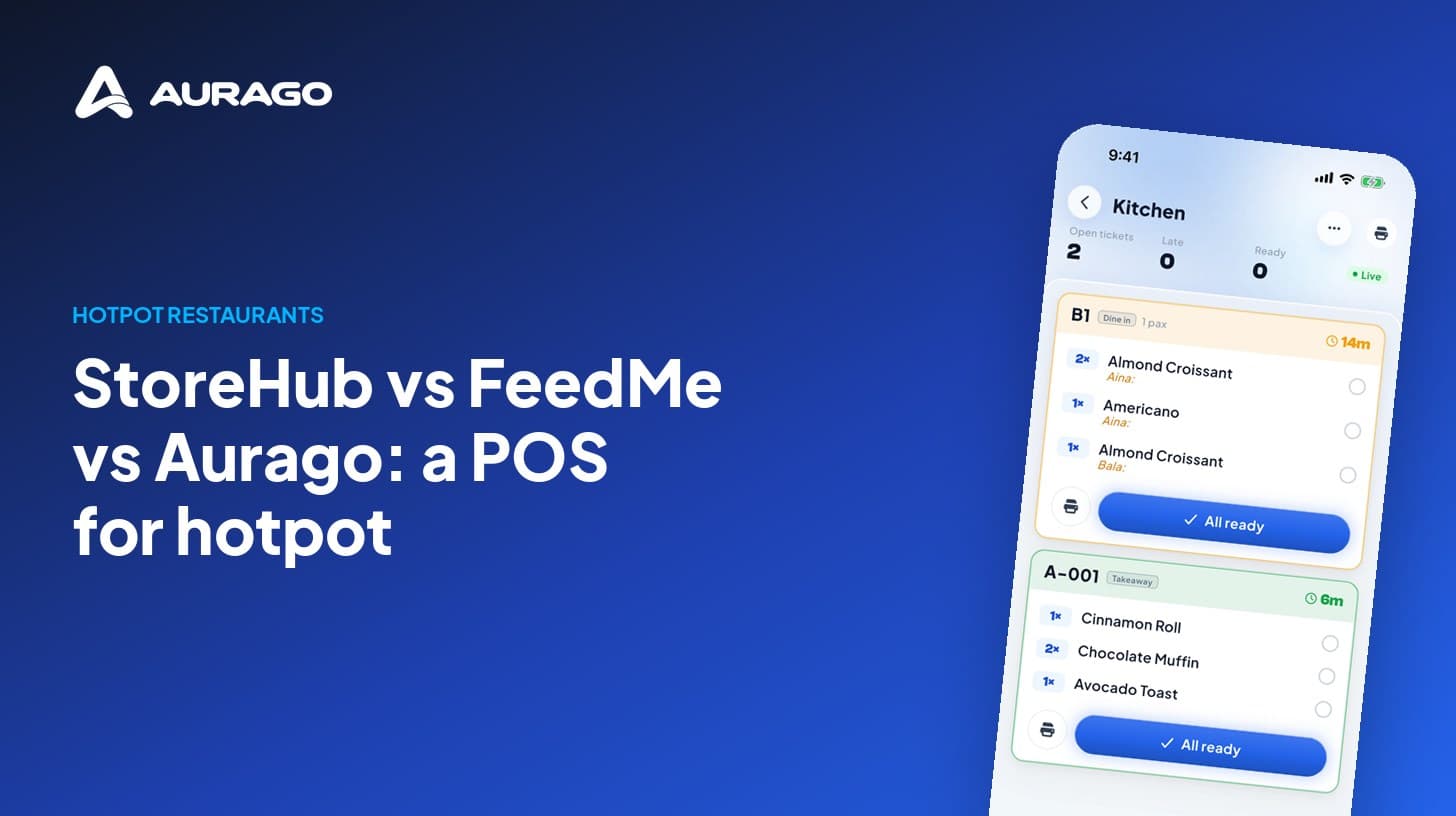
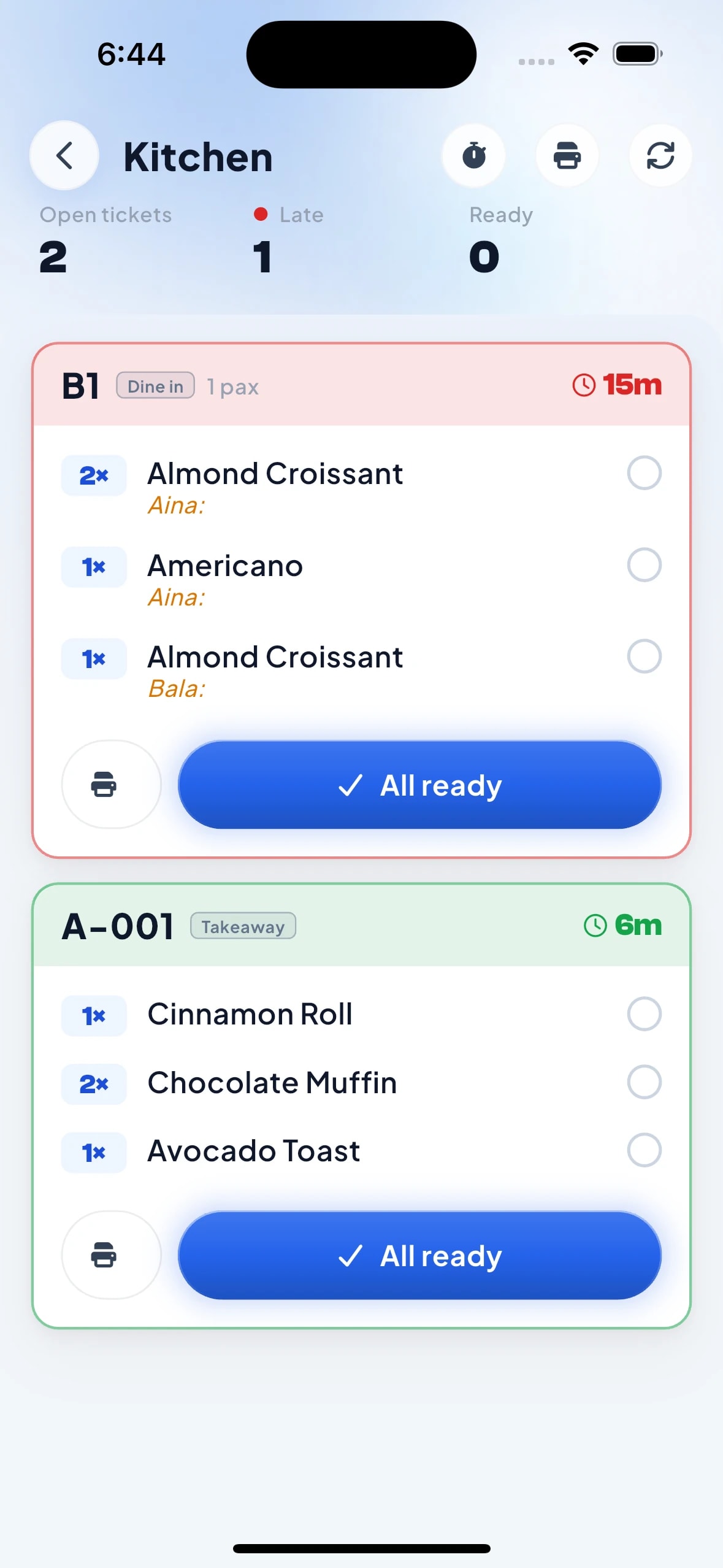
| Kitchen display | Premium | Included, with kitchen stations |
| Pickup and order-status screen | Premium | Included (Now Serving board) |
| Delivery-platform and mall integration | Premium | Not available |
| Accounting | Connects to accounting software (Standard and Premium) | Built in: takings post to your own ledger |
| Payroll (EPF, SOCSO, EIS, PCB) | Lists an HR module; ask what it covers | Built in, from the same clock-ins and shifts |
| LHDN e-Invoice | Included in its platform | Included: a QR on each receipt for the customer to request one, the rest filed monthly |
| Hardware | Sells its own POS terminals, kitchen and order screens, kiosk and payment terminal | Runs on the iPhone, iPad or Android device you have — including Sunmi and iMin terminals with a built-in printer — with Bluetooth or network printers |
| Card payments at the counter | Its own payment terminal | A HitPay card reader: the till sends it the amount |
| Free trial | 30 days, on request | First billing period free, no card |
FeedMe doesn't publish its POS plan prices; its pricing page asks you to get in touch. It does price one add-on — Connect Premium, for marketing, CRM and feedback, at RM 90 a month — and quotes Inventory Premium on request. Outside FeedMe's own site, Vulcan Post reported a starting price of RM 90 a month in 2024, and StoreHub's comparison quotes FeedMe's Standard plan from RM 1,080 a year. Hardware is bought separately, so ask for one quote that names the plan, the devices and every add-on you need.
Aurago publishes one price list, and every plan includes everything: the till, stock, accounting, invoicing and e-Invoice, payroll, attendance and leave, projects and team chat. Plans differ only in how many people they cover.
| Team | Plan | Per month |
|---|---|---|
| Up to 5 | Solo | RM 49 |
| 10 | Core | RM 89 |
| 20 | Core | RM 169 |
| 30 | Advance | RM 229 |
Prices are in ringgit and exclude 8% SST. Four rules make the bill predictable:
A café with 12 staff across two outlets pays RM 117 a month on Core: the tills at both outlets, the books, and payroll for all twelve.
Your takings land in your own books. Switch posting on and each trading day becomes one journal per outlet: sales net of SST, the SST you owe, each payment method to its account, HitPay's fees, tips owed to staff, and the cost of what you sold against your stock. Your accountant chooses the accounts, and per-receipt posting is there if your auditor asks for it. There is no export, so there is no second system to reconcile against.
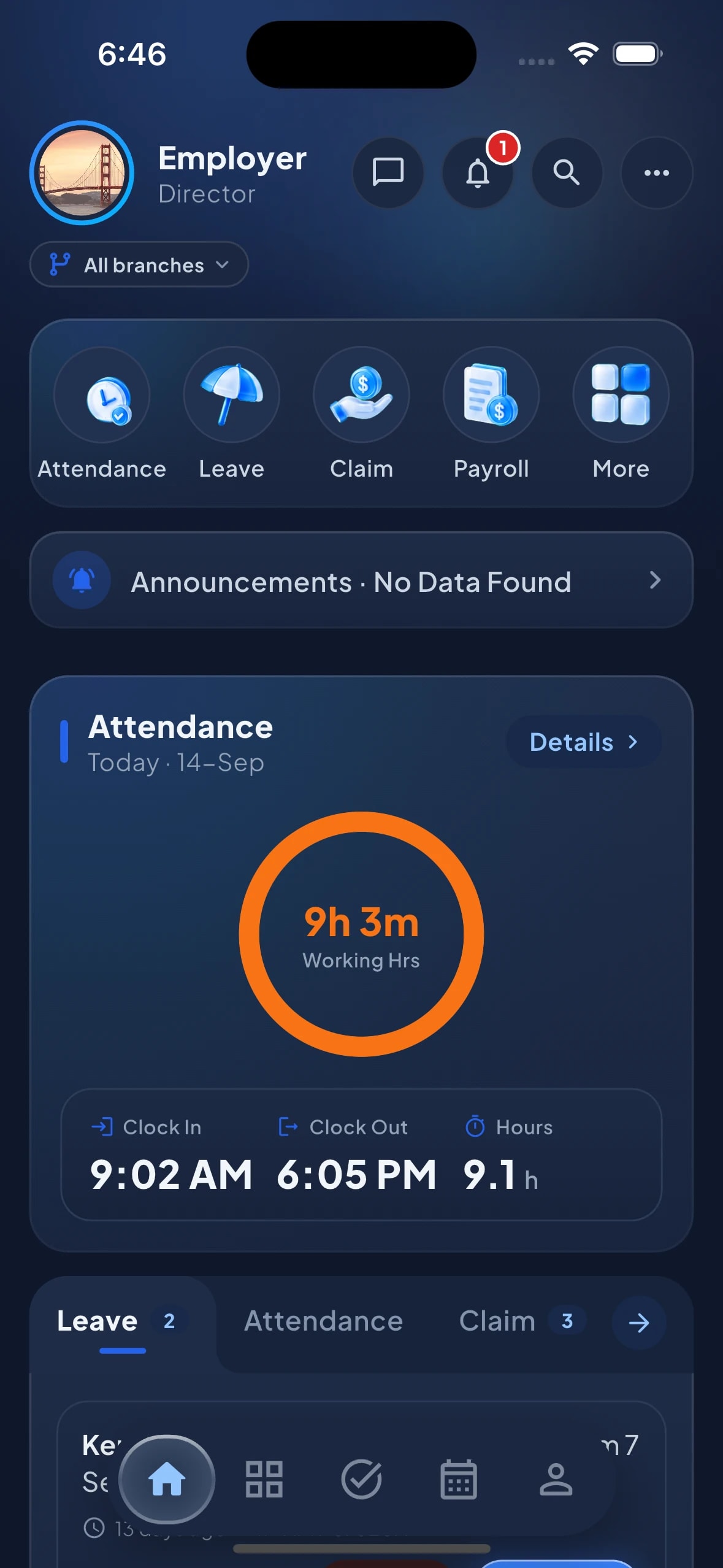
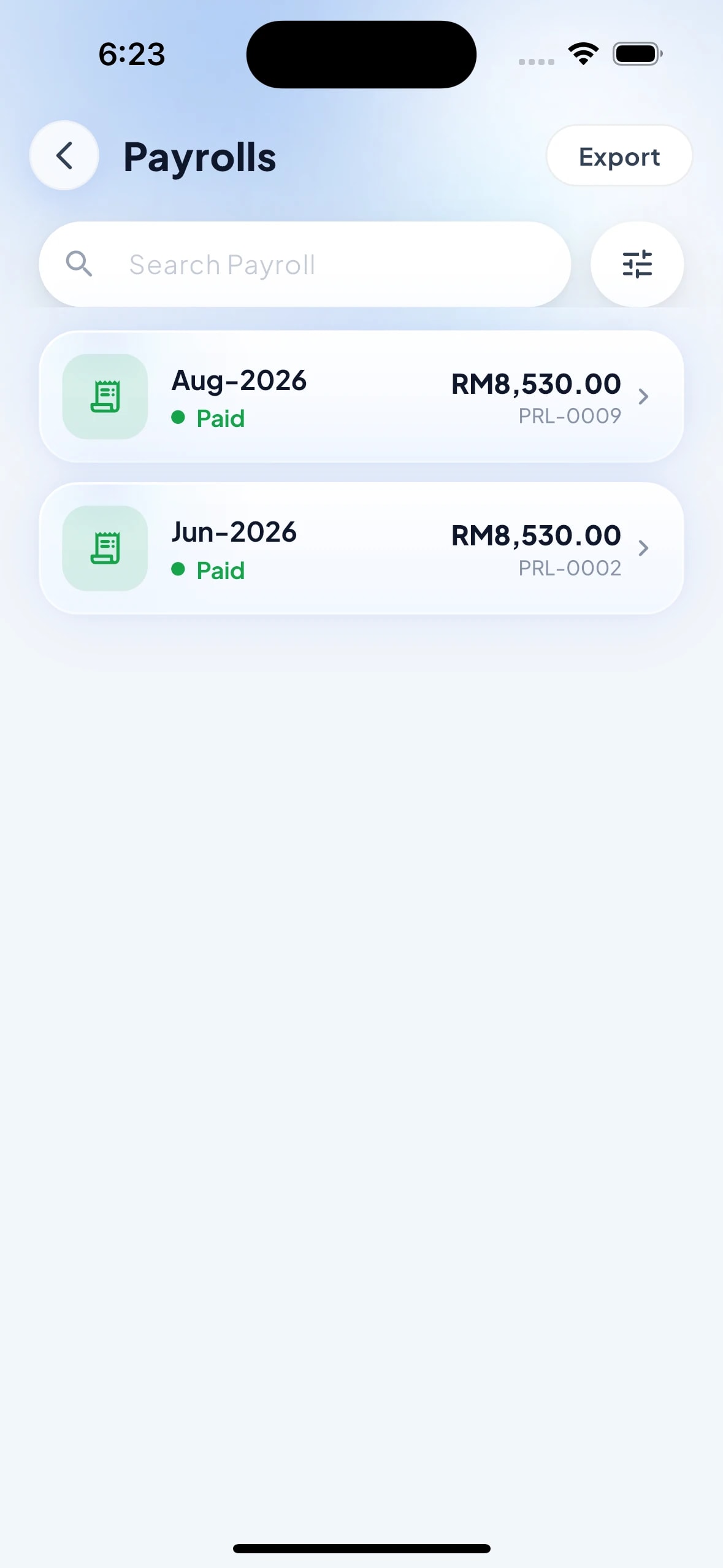
Payroll runs on the same clock-ins. Staff clock in on their phones, inside a geofence. Shifts, leave and overtime flow into the pay run, which works out EPF, SOCSO, EIS and PCB and produces EA forms. Tips collected at the till can go out with the salary.
The price follows your team, not your hardware. Add a till for the lunch rush or open a second outlet and the bill doesn't move.
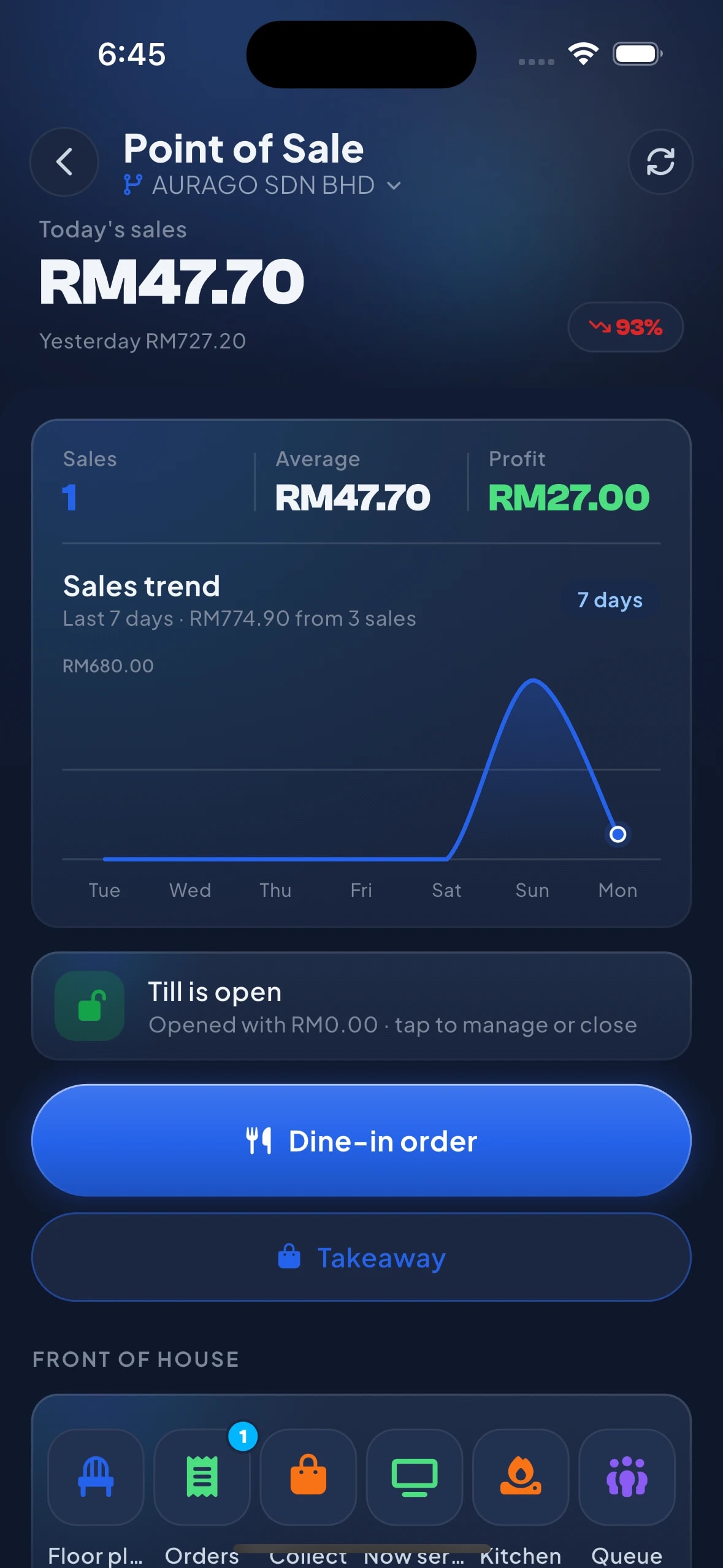
The counter is complete on every plan:
Menus in three languages. Dish names, choices and descriptions carry English, Bahasa Malaysia and Chinese, and the ordering page shows each customer their own language.
You don't have to retype your menu. Send us your FeedMe store link and we'll bring the menu across: sections, dishes, prices, photos and choices — sizes, add-ons and what they cost — with names in English, Bahasa Malaysia and Chinese. Nothing is imported until the plan has been checked, and names and prices can be changed first.
Two things stay behind: stock counts (imported dishes start with stock tracking off, so you count in once) and your sales history, which remains in FeedMe. Run both side by side for a few days if you want to be sure, then move the counter over.
Choose FeedMe if your priority is a restaurant setup from a single supplier — terminals, kitchen and order screens, a payment terminal, delivery and mall links — and you're content to run accounting and payroll in other software.
Choose Aurago if you'd rather run the whole business in one place: the counter, the kitchen, the stock, the books, the payroll and the team, on one set of records and one monthly bill. Running a hotpot or steamboat restaurant? We've also compared StoreHub, FeedMe and Aurago for hotpot.
It depends on your team and your setup, and FeedMe doesn't publish its plan prices, so compare quotes rather than list prices. Aurago is priced by headcount — from RM 49 a month, and RM 89 for a team of ten — and that price already includes accounting and payroll. With a standalone POS, add what you pay for accounting software and payroll to get a like-for-like figure.
Yes. It keeps ringing sales when the connection drops and sends them when it's back. Receipts still print.
An iPhone, iPad, or Android phone or tablet — or an Android POS terminal with a built-in printer (Sunmi or iMin) — and a Bluetooth (BLE) or network thermal printer for receipts and kitchen tickets. Barcodes scan with the camera or with a USB or Bluetooth scanner, and card payments go to a HitPay card reader, which the till sends the amount to. Tell us your printer model and we'll check it.
Yes. Switch it on and each receipt can carry a QR code: the customer scans it, fills in their details and gets their e-Invoice by email once LHDN validates it — or the cashier issues one at the counter. Receipts nobody asks about are filed together as one consolidated e-Invoice in the first seven days of the next month, as LHDN requires, and a refund on an e-Invoiced receipt gets a refund note. Aurago submits to MyInvois with your own LHDN credentials. Since 1 September 2026, businesses with annual revenue under RM 3 million are exempt from e-Invoice, subject to LHDN's conditions on group ownership (The Star). Ask your accountant whether that includes you.
Yes: sections, dishes, prices, choices and photos, with names in English, Bahasa Malaysia and Chinese. Stock counts and sales history stay in FeedMe.
No. The same till serves cafés, bars, bakeries, shops and grocers, salons and clinics, rentals and repair counters, and each trade gets its own dashboard. See the trades Aurago is set up for.
Sign up without a card. Use the whole product free until the end of the month, or the end of next month if you join in its last two weeks. At period close you get a real, itemised invoice for RM 0.00 showing what it would have cost.