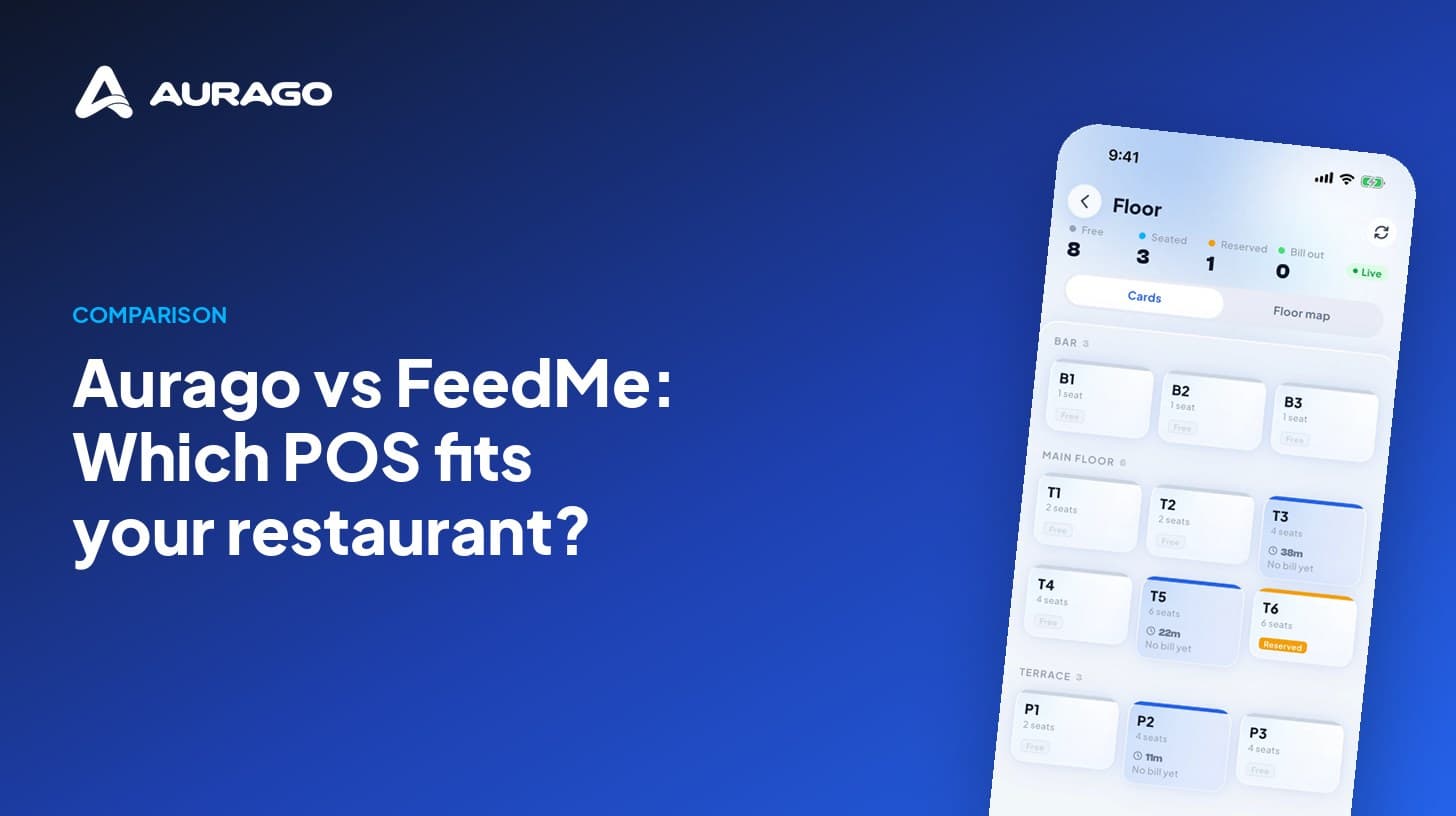
Aurago vs FeedMe: Which POS Fits Your Restaurant?
FeedMe is a restaurant POS with its own hardware. Aurago's till shares one set of records with your books and payroll. Prices and features, side by side.
Soup bases, rounds of add-ons, QR ordering, split bills: what a hotpot restaurant needs from a POS, and how StoreHub, FeedMe and Aurago compare.
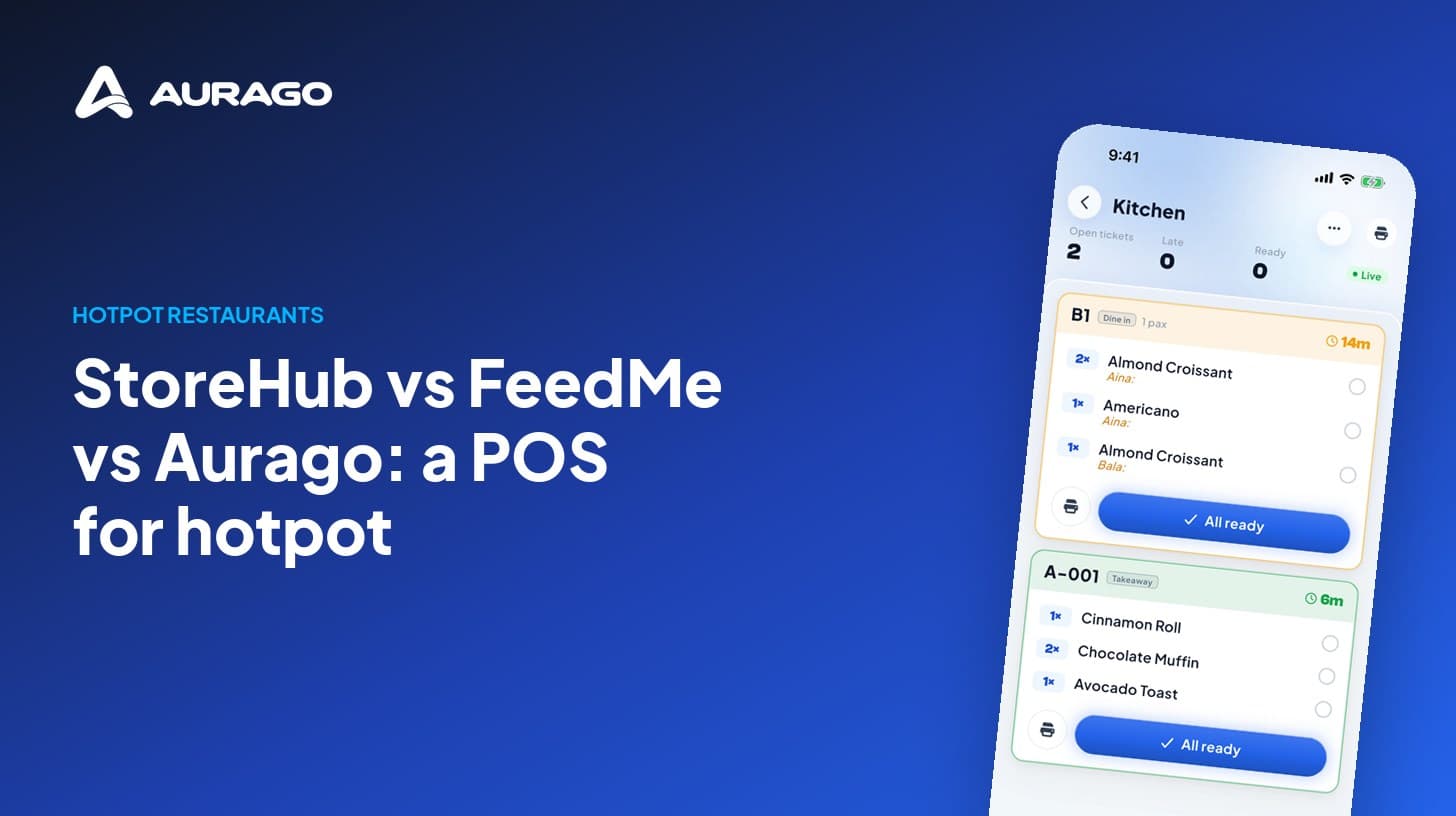
A hotpot table is hard work for a POS. It orders a split pot with two soup bases, keeps adding plates for two hours, asks for the bill, then wants it split four ways. The kitchen needs every round the moment it's ordered, and the counter needs to know which tables are still eating.
StoreHub has compared itself with FeedMe for hotpot restaurants. This guide adds Aurago and compares all three on the jobs a hotpot restaurant actually does. Aurago wrote it, so every figure about StoreHub and FeedMe links to where we read it, on 25 September 2026.
| StoreHub | FeedMe | Aurago | |
|---|---|---|---|
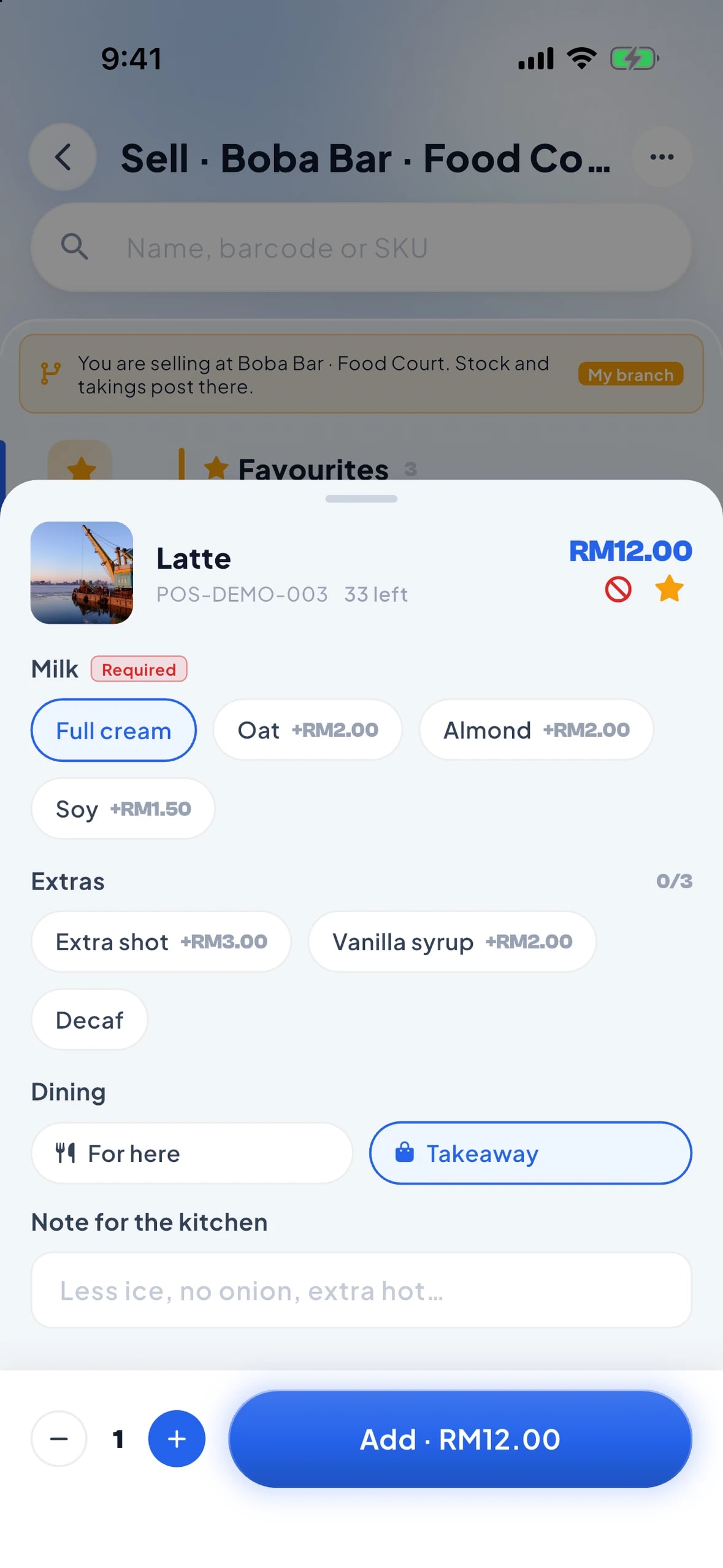
| Soup bases and add-ons | Modifiers, shown on the kitchen display | Menu choices and variants | Required and optional choice groups with prices; extras can repeat |
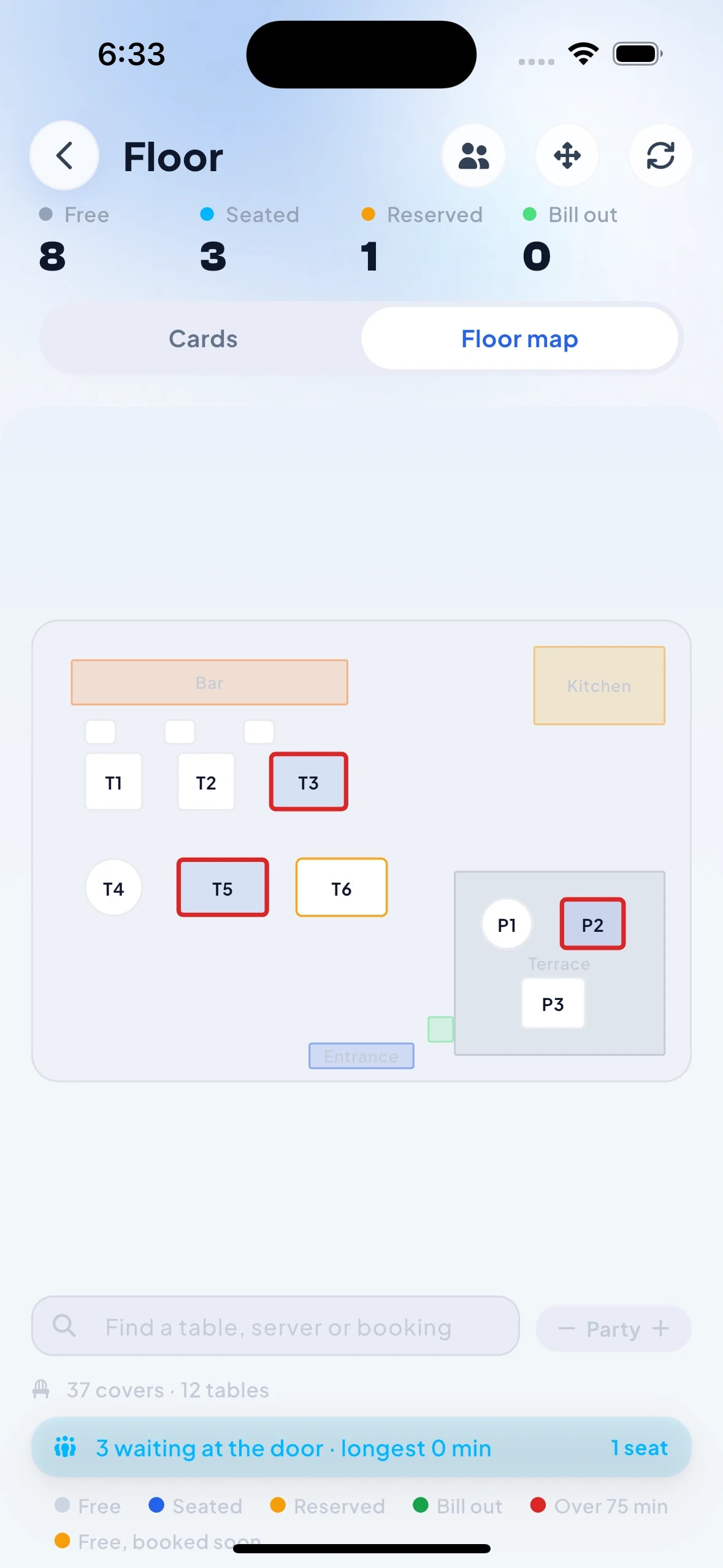
| QR ordering at the table | QR Order & Pay | Standard plan and up | Included; codes can expire when the table is cleared |
| Kitchen | Kitchen display that routes orders to prep stations | Kitchen display on Premium | Kitchen display with stations, or tickets at each station's printer |
| Pay after, split and merge | Splits and merges orders and tables | Table management | Open tabs, pay after, split by line, merge tables |
| Delivery | Beep, its own delivery platform | Delivery integration on Premium | Not available |
| Accounting | Syncs to Xero, QuickBooks Online, ABSS or Financio | Connects to accounting software (Standard and up) | Built in |
| Payroll | Timesheets, hours exported for payroll | Lists an HR module; ask what it covers | Built in: EPF, SOCSO, EIS, PCB |
| e-Invoice for till receipts | Yes: a QR on each receipt, the rest monthly | Included in its platform | Yes: a QR on each receipt, the rest monthly |
| Published price | Starter from RM 122 a month; multi-outlet from RM 235 | On request (reported from RM 90 a month in 2024) | From RM 49 a month; RM 89 for 10 staff |
A busy outlet with a lot of delivery and takeaway. StoreHub's Beep and QR Order & Pay, or FeedMe's delivery integration and order display, are built for that traffic. Aurago has no delivery integration.
A chain that wants one supplier for the hardware. FeedMe's Premium plan pairs with its own POS terminals, kitchen and order screens and payment terminal.
An owner who wants the floor, the kitchen, the books and the payroll in one place. After rent, a hotpot restaurant's biggest costs are ingredients and people. Aurago keeps both on the same records as the till: give a plate a recipe and each sale deducts the ingredients it used, the day's takings post to the ledger, and the pay run comes from the same clock-ins.
All three will run a hotpot floor: QR ordering at the table, a kitchen display and bills that split. Choose StoreHub or FeedMe if delivery and dedicated hardware matter most. Choose Aurago if you want the till, the stock, the books and the payroll to be one system. For a closer look at each, read Aurago vs FeedMe and Aurago vs StoreHub.
It depends on how you trade. For heavy delivery and takeaway, StoreHub (Beep, QR Order & Pay) and FeedMe (delivery integration, order display) are built for it. For one system that runs the floor, the kitchen, the books and the payroll, Aurago. All three do QR ordering at the table and a kitchen display.
Yes, with all three. In Aurago, each table's code can stop working when the table is cleared, so a photo of the code can't be used to order from home.
StoreHub and Aurago both split and merge bills. In Aurago you move any lines, or part of a line, to a new bill or to another open bill, which is also how two tables are merged.
Since 1 September 2026, businesses with annual revenue under RM 3 million are exempt, subject to LHDN's conditions on group ownership (The Star). Above that, your sales need e-Invoices — for walk-in customers, usually a monthly consolidated one. StoreHub and Aurago both put a QR code on each receipt and consolidate the rest each month, and FeedMe lists e-invoicing in its platform.
StoreHub publishes plans from RM 122 a month, with multi-outlet management from RM 235. FeedMe quotes on request; Vulcan Post reported a starting price of RM 90 a month in 2024. Aurago is priced by team size: a hotpot restaurant with 20 staff pays RM 189 a month on Core, which includes accounting and payroll. Prices exclude SST, and hardware is extra with all three.
Sign up without a card. Use the whole product free until the end of the month, or the end of next month if you join in its last two weeks. At period close you get a real, itemised invoice for RM 0.00 showing what it would have cost.